
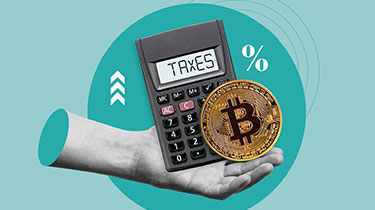
Cryptoassets might feel new and different, but HMRC’s approach to taxing them is anything but relaxed. Reporting rules are tightening, data-sharing is increasing, and HMRC has far more visibility into crypto activity than many people realise.
If you hold or trade cryptoassets, here’s what’s changed, what counts as taxable, and why now is a good time to get your records in order.
HMRC Treats Crypto as Property, Not Currency
This is the starting point for everything else. Because HMRC treats cryptoassets as property rather than money, most activity falls into one of two tax categories:
- Capital Gains Tax (CGT) — when you dispose of a cryptoasset
- Income Tax — in specific situations, such as mining, staking, or tokens received through employment
That basic principle hasn’t changed. What has changed is how closely HMRC is now watching.
What’s Changed Recently
- HMRC is getting data directly from exchanges — both UK-based and overseas — so it increasingly already knows about transactions before you file
- A new global reporting framework (CARF) is being adopted by the UK, which will increase cross-border data sharing from around 2026
- More “nudge letters” are being sent, prompting people to review and correct past tax returns
- Crypto disclosures are under closer review as part of standard self-assessment checks
The direction is clear: HMRC expects crypto activity to be reported fully and accurately, and it’s building the tools to check.
The Part Most People Get Wrong: What Actually Counts as “Selling”
Many people assume tax only applies when crypto is converted into pounds sterling. That’s not correct. Several everyday actions count as a “disposal” and can trigger a tax bill, even if you never touch cash:
- Selling crypto for GBP (or any other currency)
- Swapping one cryptoasset for another (e.g. Bitcoin for Ethereum)
- Spending crypto to buy goods or services
- Gifting crypto to anyone other than a spouse or civil partner
Each of these needs a gain or loss calculated, just as if you’d sold shares.
A few real-world examples
Swapping one crypto for another You buy Bitcoin for £10,000. Later, you swap it for Ethereum when the Bitcoin is worth £18,000. → That’s a taxable gain of £8,000 — even though no cash changed hands.
Spending crypto You bought crypto for £2,000. You later use it to buy a laptop worth £5,000. → That’s treated the same as selling it: a taxable gain of £3,000.
Gifting crypto Give crypto to a friend or family member (not your spouse/civil partner) and it’s treated as if you sold it at market value — a taxable disposal. Gifts between spouses or civil partners, by contrast, are generally tax-neutral, which can open up useful planning options.
Staking rewards Crypto you earn through staking is normally taxed as income when you receive it, based on its value at that time. If you later sell those tokens, a second tax charge (CGT) can apply on any further increase in value.
Why Record-Keeping Matters More Than Ever
A lot of crypto investors have patchy records spread across multiple wallets and exchanges. This is a real risk area: if you can’t prove what you paid for an asset, HMRC may treat your cost as £0 — meaning the entire sale proceeds become taxable, not just the gain.
To protect yourself, keep:
- Full transaction histories from every exchange and wallet you’ve used
- Dates and GBP values at the time of both purchase and sale
- Records of any fees paid
- Details of transfers between your own wallets
Good records now can save a significant amount of tax — and stress — later.
Simple Steps to Stay Ahead
- Make full use of your annual CGT exemption (note: this has been cut significantly in recent years, so allowances go less far than they used to)
- Think about the timing of disposals across tax years
- Look at whether losses elsewhere could offset crypto gains
- If you trade very frequently, it’s worth checking whether HMRC could view this as a trading business rather than investment (uncommon, but possible)
- If you have gains from previous years that were never declared, get advice sooner rather than later — voluntary disclosure is treated far more favourably than being caught
We Can Help You Get This Right
Crypto tax isn’t complicated because people are trying to avoid it — it’s complicated because the rules touch so many different types of transaction, spread across multiple platforms. That’s exactly the kind of complexity we deal with every day.
We can help you:
✔ Review your full transaction history across exchanges and wallets ✔ Calculate your gains and losses accurately ✔ Make sure your tax return is complete and compliant ✔ Identify legitimate planning opportunities before it’s too late to use them
If you’ve bought, sold, swapped, spent, or earned cryptoassets, don’t wait for a nudge letter to find out where you stand.
Get in touch with us today for a no-obligation conversation about your crypto tax position. The earlier we talk, the more options we usually have to help you.


